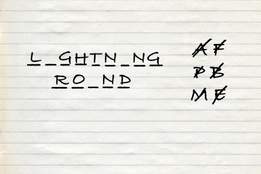
Illustration of braille
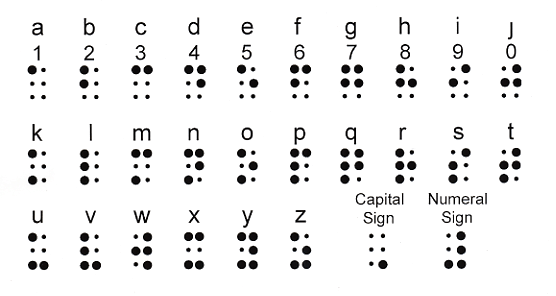
- braille alphabet

In 1824, Louis Braille invented the system we call braille, a universal system of writing and printing for the blind. Characters embossed on paper are read by passing the fingers lightly over the manuscript. The system is based on a matrix of six raised dots arranged in two columns of three. The 63 combinations possible in this framework stand for letters, numbers, punctuation marks, and common words like and and the. A braille code for English was not adopted until 1932. Modifications also exist for other languages, for mathematical and technical material, and for musical notation. Braille may be handwritten—from right to left— using a stylus to press dots into a piece of paper between hinged metal plates When the sheet is turned over, the dots face up, and are read from left to right. Braille typewriters and electric embossing machines are also used.
“Braille.” Merriam-Webster.com Dictionary, Merriam-Webster, https://www.merriam-webster.com/dictionary/braille. Accessed 7 Jul. 2026.
 Copy Citation