: to seclude from the world in or as if in a cloister
a scientist who cloisters herself in a laboratory
policy makers are cloistered for the weekend, trying to stave off a default that they fear could trigger an international financial panic—Art Pine
2
: to surround with a cloister
cloistered gardens
Did you know?
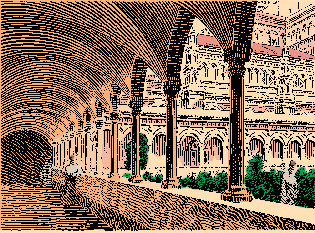
Cloister first entered the English language as a noun in the 13th century, referring then (as it still does) to a convent or monastery. More than three centuries later, English speakers began using the verbcloister to mean “to seclude in or as if in a cloister.” Today, the noun can also refer to the monastic life or to a covered and usually arched passage along or around a court. You may also encounter the adjective cloistered with the meaning “separated from the rest of the world [as if in a cloister],” as in “She leads a private, cloistered life in the country.” Cloister ultimately comes from the Latin verb claudere, meaning “to close.” Other words that can be traced back to the prolific claudere include close, conclude, exclude, include, preclude, seclude, and recluse.
Examples are automatically compiled from online sources to
show current usage.Read More
Opinions expressed in the examples do not represent those of Merriam-Webster or its editors.
Send us feedback.
Noun
Yes, the garden cloister arches are brand new, but the seamless blend of old and fake old really works.—
Condé Nast,
Condé Nast Traveler,
4 June 2026 The cathedral, its peaceful cloister, and its ornate crypt are also worth a visit.—
Laura Itzkowitz,
Travel + Leisure,
25 June 2026
Verb
No one wanted to be cloistered in the Capitol this long.—
Sun Sentinel Editorial Board,
Sun Sentinel,
28 May 2026 She has been coddled and cloistered within her city, but the spreading vegetation interferes with that way of life.—
Hannah Gold,
New Yorker,
17 June 2026 See All Example Sentences for cloister
Word History
Etymology
Noun and Verb
Middle English cloistre, from Anglo-French, from Medieval Latin claustrum, from Latin, bar, bolt, from claudere to close — more at close entry 1