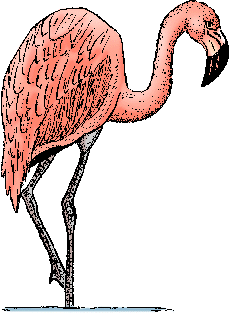
: any of several large aquatic birds (family Phoenicopteridae) with long legs and neck, webbed feet, a broad lamellate bill resembling that of a duck but abruptly bent downward, and usually rosy-white plumage with scarlet wing coverts and black wing quills
Illustration of flamingo
Examples of flamingo in a Sentence
Recent Examples on the Web
Examples are automatically compiled from online sources to
show current usage.Read More
Opinions expressed in the examples do not represent those of Merriam-Webster or its editors.
Send us feedback.
The space offers about 50 seats in a flamingo pink single dining room.—
Katelyn Umholtz,
Kansas City Star,
6 July 2026 Captive flamingos were brought as early as the 1920s from elsewhere in the Caribbean to amuse tourists.—
Matthew Wills,
JSTOR Daily,
6 July 2026 Outside Kordestani’s glass doors, a gigantic inflatable flamingo moved back and forth in an infinity pool.—
Melanie Thernstrom,
New Yorker,
29 June 2026 Some protesters carried pink flamingo balloons, a reference to the birds supposedly threatened by the resort construction project.—ABC News,
4 July 2026 See All Example Sentences for flamingo
Word History
Etymology
obsolete Spanish flamengo (now flamenco), literally, Fleming, German (conventionally thought of as ruddy-complexioned)
: any of several rosy-white birds with scarlet wings, a very long neck and legs, and a broad bill bent down at the end that are often found wading in shallow water
Etymology
from Portuguese flamingo "flamingo," from Spanish flamenco "flamingo," derived from Latin flamma "flame"; so called from the fiery red feathers on the underside of the wings


 Copy Citation