: a rigid piece that transmits and modifies force or motion when forces are applied at two points and it turns about a third
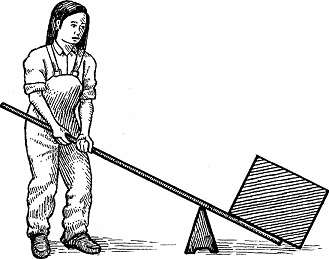
specifically: a rigid bar used to exert a pressure or sustain a weight at one point of its length by the application of a force at a second and turning at a third on a fulcrum
b
: a projecting piece by which a mechanism (see mechanismsense 1) is operated or adjusted
Noun
They used their money as a lever to gain political power. Verb
He levered the rock out of the hole.
the workers used crowbars to lever the heavy stone block into its new position
Recent Examples on the Web
Examples are automatically compiled from online sources to
show current usage.Read More
Opinions expressed in the examples do not represent those of Merriam-Webster or its editors.
Send us feedback.
Noun
The irony is that most companies sense this but keep pulling the same levers.—
Suyash Karn,
Forbes.com,
8 July 2026 They were controlled by two sets of levers, with plastic buttons that made the combatants throw left jabs and right uppercuts.—
Jack Lang,
New York Times,
5 July 2026
Verb
And those tails, on both sides, are levered bets on Musk succeeding or failing.—
Vineer Bhansali,
Forbes.com,
18 June 2026 The drop was exacerbated by a large number of traders who were highly levered, borrowing money to increase the size of their bets.—
John Towfighi,
CNN Money,
13 Oct. 2025 See All Example Sentences for lever
Word History
Etymology
Noun
Middle English, from Anglo-French levier, lever, from lever to raise, from Latin levare, from levis light in weight — more at light
: a stiff bar for applying a force (as for lifting a weight) at one point of its length by effort at a second point and turning at a third point on a fulcrum
Middle English lever "bar for prying," from early French levier (same meaning), from lever (verb) "to raise," from Latin levare "to raise" — related to elevate


 Copy Citation